Next Steps for New Knitters

So you took up knitting recently...let me just say that it absolutely thrills me that you have! Knitting has been such a lifesaver for me and I honestly can't imagine life without it.

After you take some classes and get some finished projects off your needles, what next? If you have a thirst for more and want to really immerse yourself in the world of knitting, here are some ideas to get you started. This is by no means an exhaustive list!

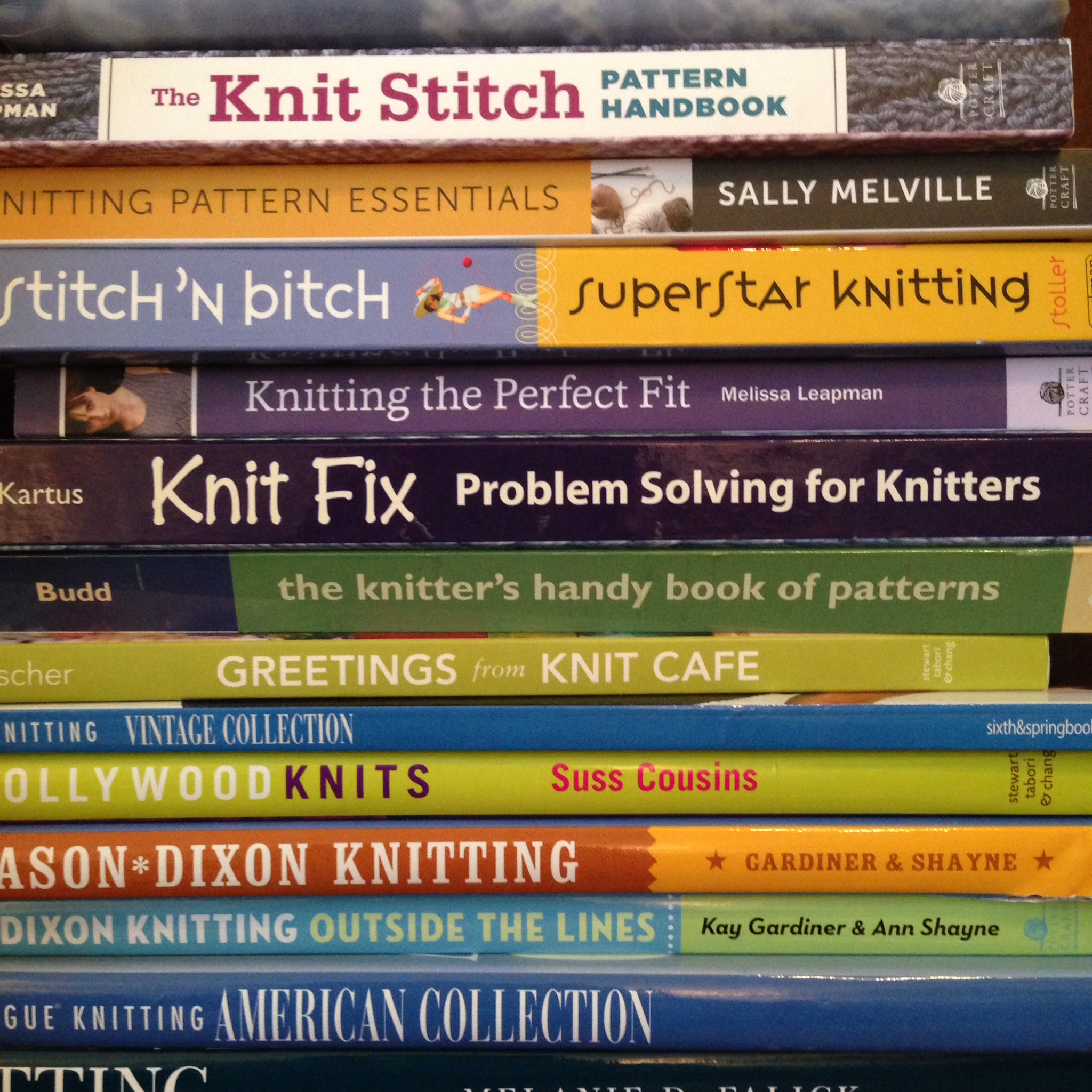
1. Read all the books. OK, maybe not all of them, at least not at once. Check your local library for knitting books so you can find the writers whose styles suit you. My favorites: Melissa Leapman (Stashbuster Knits and a zillion others), Sally Melville (The Knit Stitch and more), Debbie Stoller (Stitch n' Bitch and Stitch n' Bitch Superstar Knitting), Maggie Righetti (Knitting in Plain English). Then, do yourself (and the writers) a favor: buy the books you like. You will have moments in the middle of a long weekend when you will NEED a certain pattern or knitting tip that you saw and it will be better for everyone if you've got the book on your shelf already. Trust me.

2. Follow some blogs. Of course I hope you follow this one :)  These are a few to consider: Mason-Dixon Knitting, The Yarn Harlot, Ann Budd, KnitPicks, Patty Lyons, The Grandmother Gig, Spinsjal, KnittyKnittyChainChain, The Knitting Needle and the Damage Done, and of course The Feisty Redhead. (I know I've left some out...you blog followers out there--feel free to comment with links to blogs you've found helpful!)

3. Join (or start) a knitting group. When I learned to knit, I couldn't find a knitting group in my area, so I started one. Check Meet Up, Google "knitting group" for your area, or look on Ravelry.

4. Keep knitting. I mean it. Don't stop. Find something you like to knit (sweaters, scarves, socks, mittens, blankets, dishcloths, etc) and knit it. Find a technique you love (stockinette, basket-weave, cables, lace, intarsia) and knit it. Find a charity you want to support (Red Scarf Project, Knit Your Bit, etc) and knit for it. The more you knit, the better you'll get and the more enjoyable it will be. If you get stuck on a project, for heaven's sake, CALL me and we'll get through it together. Don't give up.

5. Take more classes, but don't overdo it. I have a friend who says her first knitting project was a Fair Isle sweater. Her. First. Project. There followed a number of years in which she knit nothing, although she did eventually pick it back up. It's easy to take on too much at first. Just because the woman sitting next to you at knitting group is knitting a lace shawl that she designed, (link included because this actually happened to me!) doesn't mean you are any less legit as a knitter because you are making a garter stitch scarf. What I'm saying is: learn more but don't burn out, thinking you have to knit all the things. You don't.

6. I assume you've already joined Ravelry. You have, right? So get involved! Join some groups (like, say, KnitOasis) and chat about patterns and yarn and movies and family and weather and whatever! Post your projects to your Notebook. Believe me, on days when you doubt yourself, it's so helpful to pull up your Notebook and see that yes, you ARE capable of something.

There you have it--a few ways to help make knitting your life, even more than it already is. Hopefully your family will understand...


Follow my blog with Bloglovin

Simple Knitting Tips: Estimate Yarn for Binding Off

In honor of the inaugural session of my new class "Finishin' Strong: Bind-offs and (Some) Seaming, today's Simple Knitting Tip is all about making sure you have enough yarn to bind off.

The first thing to consider if you want to make sure you have enough yarn is this:  buy more yarn than you think you might need. Sometimes this works, sometimes it doesn't. Sometimes you are just knitting a scarf and want to use up ALL the yarn, but if you can, buy extra yarn to save yourself some stress.

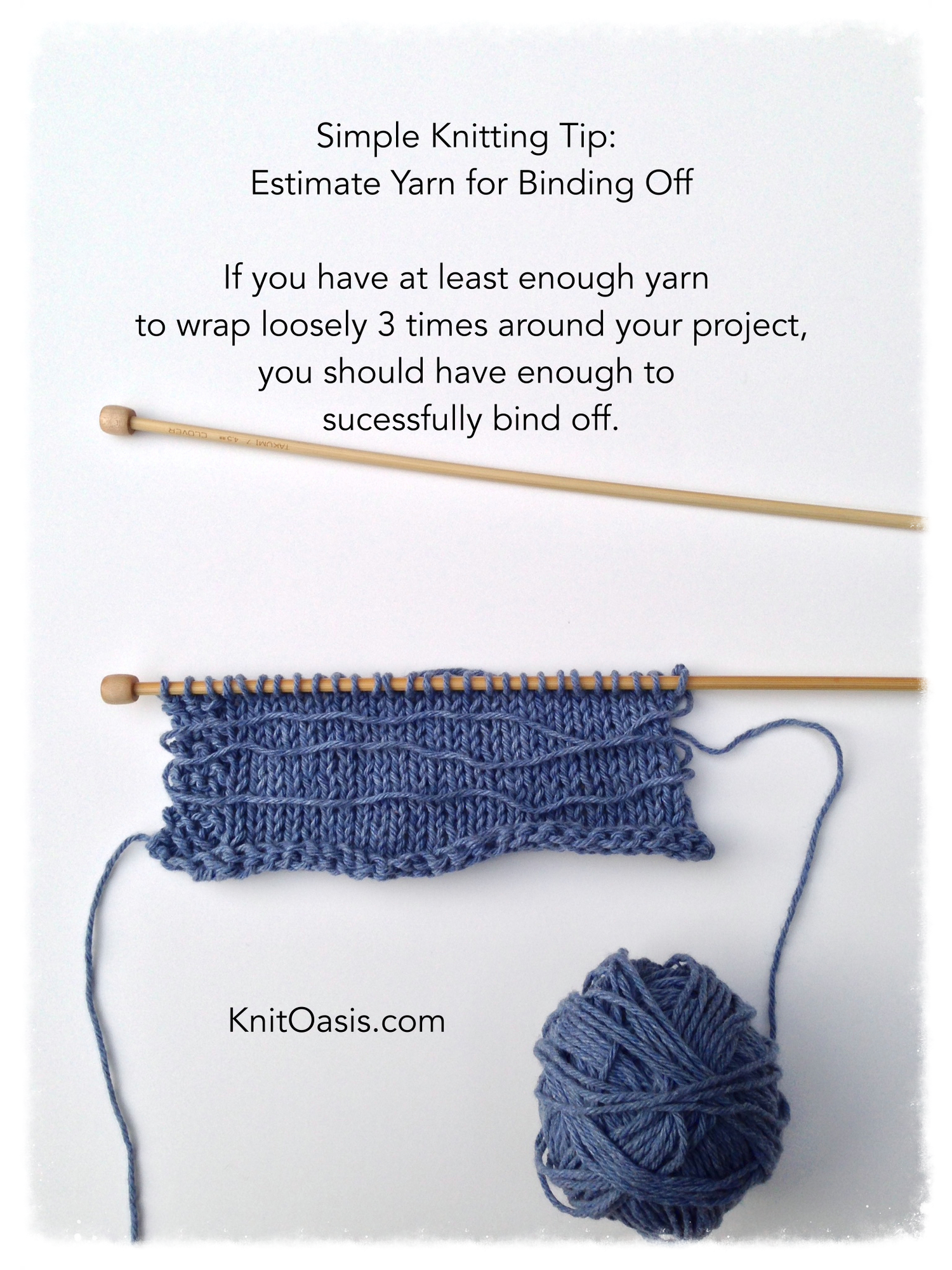
BUT. If you are in the situation that requires some careful consideration about the amount of yarn leftover, here's a simple rule of thumb trick for estimating how much yarn you'll need to bind off your project.

Wrap the working yarn l-o-o-s-e-l-y around the project 3 times (wrap 4 times if you're paranoid). The amount of yarn it takes to wrap the width of your project those three times is how much yarn you will need to bind off.

estimateyarn.jpg


Follow my blog with Bloglovin

Simple Knitting Tips: The Side Marker

When I posted this Simple Knitting Tip last week about adding a loop of yarn to your row counter and securing it with a locking stitch marker, I remembered that time I wrote about another fun use for a locking stitch marker, then realized that it was nowhere on this website. It was an awkward moment.

And so I ask you to bear with me if you've read this before, because here again, with a few improvements and maybe for the first time, is this....

Simple Knitting Tip: The Side Marker

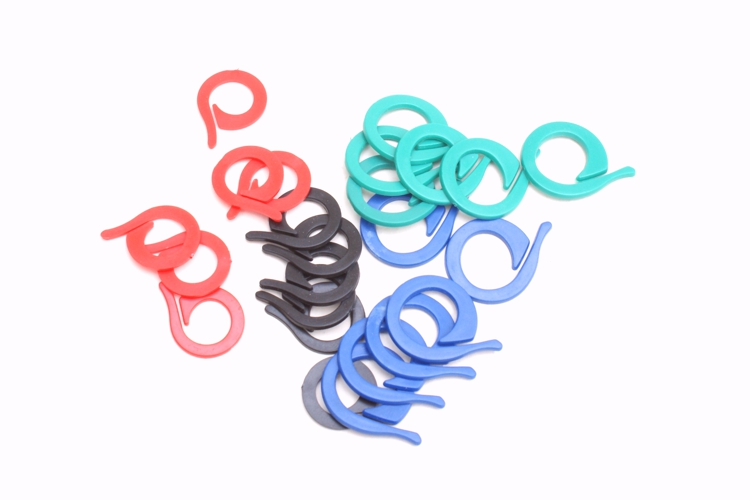
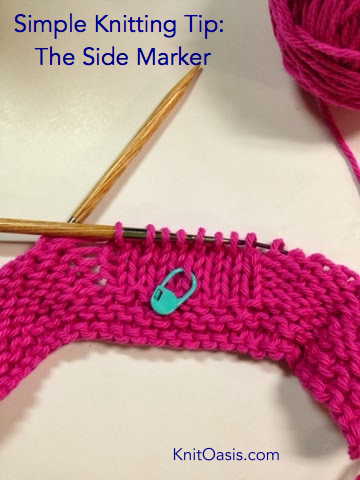
When I am knitting a project, and I need to know the right side from the wrong side, and I don't want to expend too much energy re-thinking the answer to that question over and over, I attach a marker (like the one pictured) to the right side of the work. You could attach it to the wrong side if you prefer, and I promise it won't hurt my feelings, but I strongly suggest you pick one side and stick with it. You can also tie a piece of contrasting color yarn, if you don't have a stitch marker handy that opens and closes, or if you're like me and it's just easier to cut a random piece of yarn and tie it on, because there is yarn everywhere around here.

Obviously this isn't something you'll need to use all that often, but if you're wanting to simplify things (like say you're at knitting group and there's wine involved, just a For Instance...), this can be a super quick fix. A great example of a pattern where a side marker comes in handy is my Reversible Cable Shawl, a free pattern available from Red Heart Yarns. Because it is reversible, it's not always easy to know which row you're on or which side you're on, unless you're working overtime to pay attention.  Work smarter, not harder--attach a marker to the right side and cut down on the time needed to find your place, thereby spending more time knitting, and isn't that what it's all about?

I don't recommend branching out to other types of markers, beyond the locking kind or the loop of yarn securely knotted. I have tried the non-locking type and they don't always stay on and, well, chaos. And, depending on how much wine you've had at knit night, using the stitch markers that do not open at all is really just funny for your friends to watch.

Follow my blog with Bloglovin

Simple Knitting Tips: Get a Little Loopy

When I knit, stitch markers and row counters are not optional. They are as necessary to the process as sticks and string. They can come in a wide variety of shapes, sizes, and materials, but they are an integral part of keeping me on task. Maybe you can knit an entire project without interruption, but I am always setting projects down in the middle.

When I first started knitting and wasn't yet sure I wanted to invest any money into it (I know, right? That's hilarious to think about now) I simply used hash marks on a sticky note to keep track of my rows. I just made a mark whenever I started a new row, then I could tell by looking at the paper what row I was working on when the phone rang. This actually works really well unless the length of time it takes to finish the project lasts longer than the sticky on the note.

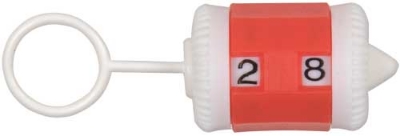
Nowadays I have a rather large collection of row counters, most of which are currently in use. I turn the number up one when I start a new row, and down one when I am "tinking" an old row.  These row counters work great on straight needles, but circulars and double-points are not very well suited to them, as the row counter tends to leave a gap in the knitting.

They do sell the ones with the plastic ring attached like the one pictured here, but, let's face it, I'm not always gentle when I'm shoving knitting into a bag. When the plastic ring breaks off and the row counter disappears, life gets a little ugly for a spell.

Today's Simple Knitting Tip: Get a Little Loopy. Put a little piece of leftover yarn through the hole on the row counter, tie it into a loop, then use it on your circulars and double-points with confidence. I usually put the little loop on a locking stitch marker, too, then use that anywhere and everywhere that you can use a locking stitch marker.

IMG_0107_2.jpg

How do you keep track of your rows? Do you prefer the plastic row counters like I use, or do you have a favorite "clicker" counter? Have you gotten a little loopy in your attempts at keeping track of your knitting? Anonymous comments are allowed, but this is, after all, a judgement-free zone. A little loopy can be a good thing.


Follow my blog with Bloglovin